STEP 01
01/04Building Query or Photo
User provides a CUHK building inquiry or photo that conventional LLMs struggle to place.
StatusActive
A RAG layer using Qdrant vector database and dense embeddings to solve CUHK building misidentification in LLMs, specifically configured for Google Vertex AI and published in Play Lab as a CUHK place finder
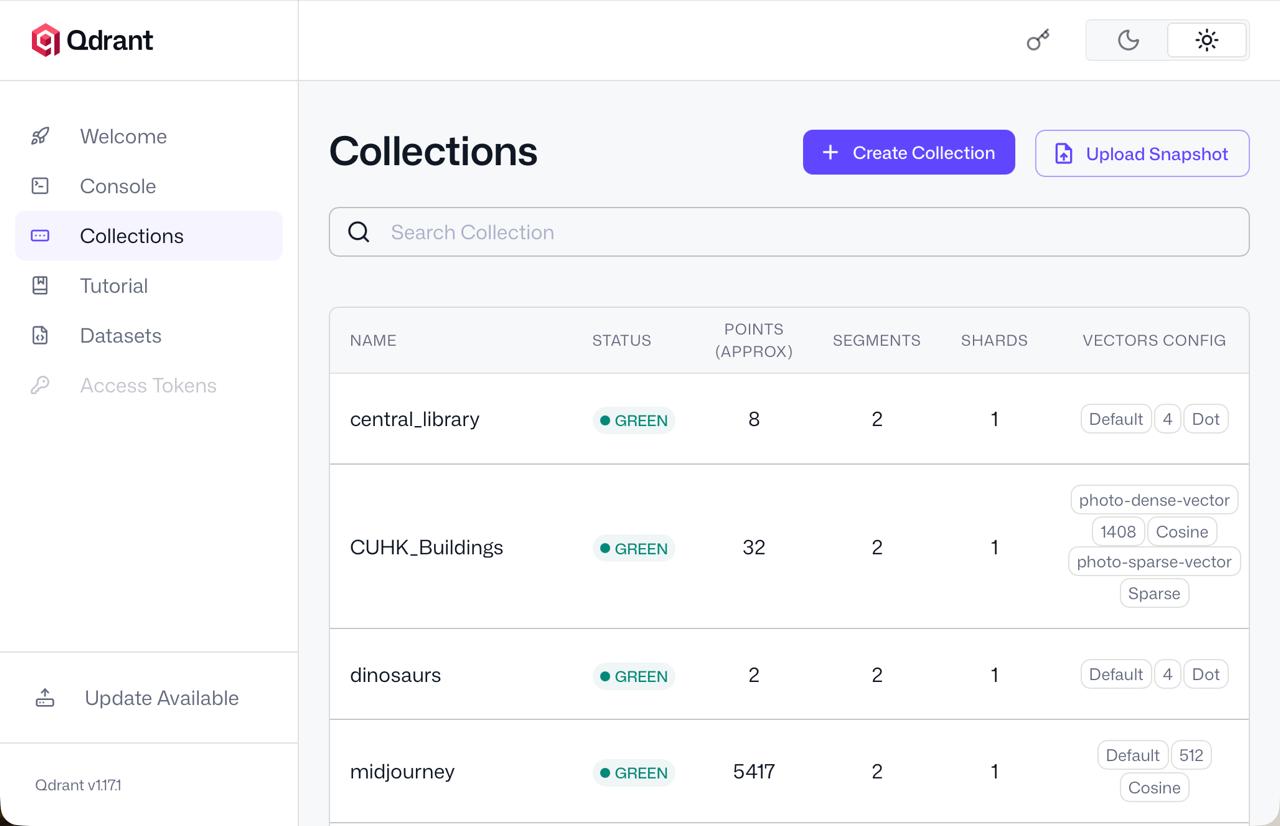
Dense Qdrant vector retrieval paired with Vertex AI to eliminate campus landmark hallucinations.
Dense vector database indexing CUHK campus buildings with Qdrant and Google Vertex AI alignment for grounded place search.
Eliminates CUHK landmark hallucination by grounding Google Vertex AI with an external Qdrant vector database.
General LLMs struggle to identify specific CUHK buildings from photos. With scarce campus building data in standard training sets and visually similar campus structures, models frequently give wrong location answers.
Introduced a RAG layer with Qdrant vector database and dense embeddings, specifically matching Google Vertex AI's working principles so the AI can accurately retrieve and identify CUHK places.
CASE STUDY ROLE: RAG ARCHITECT & SYSTEMS ENGINEER
Xavier built a dedicated RAG layer using Qdrant as the backend vector server with a dense embedding model to index CUHK campus buildings.
A tricky engineering challenge was that different LLMs behave differently: because he used Google Vertex AI, the Qdrant configuration and retrieval formatting had to match the AI's working principles so the model can read and process the results easily.
The product is effectively a CUHK place finder that makes searching campus locations much easier, and it is published in Play Lab for anyone to try.
User provides a CUHK building inquiry or photo that conventional LLMs struggle to place.
A dense embedding model converts the location query into a high-dimensional vector representation.
Qdrant searches the vector database, formatted specifically for Google Vertex AI's working principles.
Vertex AI reads the vector results to deliver the exact CUHK place. Live in Play Lab for visitors to try.